
08
2022
-
04
What are the difficulties in aluminum alloy welding? The aluminum welding agent manufacturer explains for you.
Author:
Aluminum welding agentManufacturers believe that aluminum and aluminum alloy materials have characteristics such as low density, high strength, high thermal conductivity, strong corrosion resistance, and good physical and mechanical properties, making them widely used in the welding structures of industrial products. For a long time, due to improper selection of welding methods and process parameters, aluminum alloy parts have severely deformed after welding due to excessive stress concentration, or defects such as weld porosity, slag inclusion, and incomplete fusion have caused cracks in the weld metal or material loosening, seriously affecting product quality and performance.
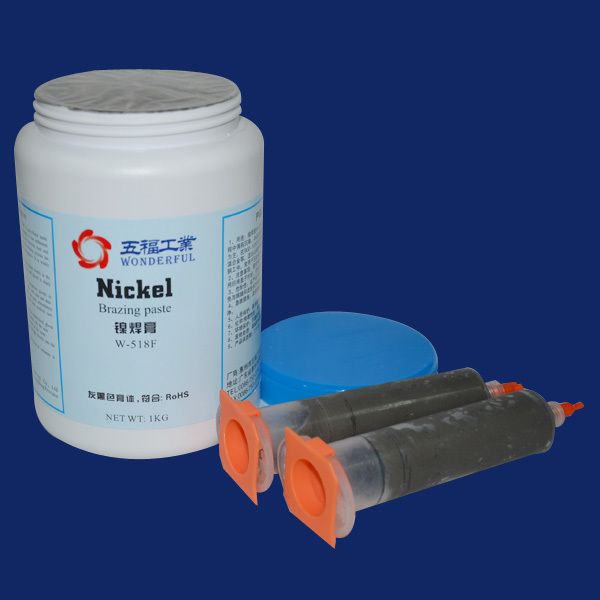
Aluminum welding agent manufacturers believe that aluminum is a silvery-white lightweight metal with good plasticity, high electrical and thermal conductivity, as well as oxidation resistance and corrosion resistance. Aluminum easily oxidizes to form an aluminum oxide film, which can easily generate inclusions in the weld seam, thereby damaging the continuity and uniformity of the metal and reducing its mechanical properties and corrosion resistance. Common chemical compositions and mechanical properties of aluminum alloy base materials and welding wires. Honor copper-aluminum wholesale.
Manufacturers believe that the welding difficulties of aluminum alloy materials are:
(1) Easily oxidized.Aluminum welding agentManufacturers believe that in the air, aluminum easily oxidizes to form a dense aluminum oxide film (thickness about 0.1-0.2m), with a high melting point (about 2050), far exceeding the melting point of aluminum and aluminum alloys (about 600). The density of aluminum oxide is 3.95-4.10g/cm3, about 1.4 times that of aluminum. The surface of the aluminum oxide film easily absorbs moisture. During welding, it hinders the fusion of the base metal, easily forming defects such as porosity, slag inclusion, and incomplete fusion, leading to a decline in weld performance.
(2) Porosity is likely to occur. Aluminum welding agent manufacturers believe that hydrogen is the main cause of porosity when welding aluminum and aluminum alloys. Since liquid aluminum can dissolve a large amount of hydrogen while solid aluminum hardly dissolves hydrogen, when the molten pool cools rapidly and solidifies, hydrogen cannot escape in time and easily accumulates in the weld seam to form porosity. Currently, it is very difficult to completely avoid hydrogen holes. There are many sources of hydrogen, such as hydrogen in the arc welding atmosphere, moisture adsorbed on the surface of aluminum plates and welding wires, etc. Practice has shown that even when the purity of argon reaches over 99.99% according to GB/T4842 standards, when the moisture content reaches 20ppm, a large number of dense pores will appear; when the relative humidity exceeds 80%, obvious porosity will appear in the weld seam.
(3) Weld seams are prone to deformation and cracking.Aluminum welding agentIt is believed that the linear expansion coefficient and crystallization shrinkage rate of aluminum are about twice that of steel, which can easily generate large internal stresses from welding deformation; structures with higher rigidity promote the occurrence of hot cracks.
(4) Aluminum has a high thermal conductivity (pure aluminum is 0.538 cal /Cm.s.). It is about four times that of steel; therefore, more heat is consumed when welding aluminum and aluminum alloys compared to welding steel.
(5) Evaporation loss of alloying elements. Aluminum alloys contain low boiling point elements (such as magnesium, zinc, manganese, etc.), which are prone to evaporate and burn under high-temperature arc action, thereby altering the chemical composition of the weld metal and reducing weld performance.
(6) Low strength and plasticity at high temperatures. Aluminum welding agent manufacturers believe that at high temperatures, aluminum has low strength and plasticity, which can damage the forming of weld metal; sometimes it can easily cause collapse or penetration of weld metal.
(7) No color change. When aluminum and aluminum alloys change from solid to liquid state, there is no obvious color change; operators find it difficult to grasp the heating temperature.
Gas shielded welding wire, silver brazing, aluminum welding agent, copper solder paste, aluminum brazing agent
Previous Page
![Notice on the Spring Festival Holiday in 2024 Huizhou Wufu Industrial Document [2024]002](https://omo-oss-image.thefastimg.com/portal-saas/pg2024101223140586307/cms/image/8ecbaf85-b2f8-4cb1-9bc9-c03d9b218443.png "Notice on the Spring Festival Holiday in 2024 Huizhou Wufu Industrial Document [2024]002")
10
2022-07
Aluminum welding flux is a flux used during aluminum welding.
30
2022-06
Aviation brazing materials are developing towards lower costs.
29
2022-06
The task control center plays an important role in handling soldering materials.
20
2022-06
Brazing process solutions, brazing equipment consulting, advanced brazing materials
15
2022-06
Selection of Gas Shielded Welding Wire - Flux-Cored Wire
08
2022-06
How to choose welding wire for gas shielded welding of steel?
28
2022-05
Types of gas shielded welding wires

Huizhou Wonderful Industrial Technology Co., Ltd.
Address: Yunshan West Road, Huicheng District, Huizhou City, Guangdong Province
Telephone:+86-752-2893501 +86-752-2200396
Mobile Phone: +86-13068287611-Mr. Chen
Website:www.cnwufu.com
E-mail:sales@cnwufu.com